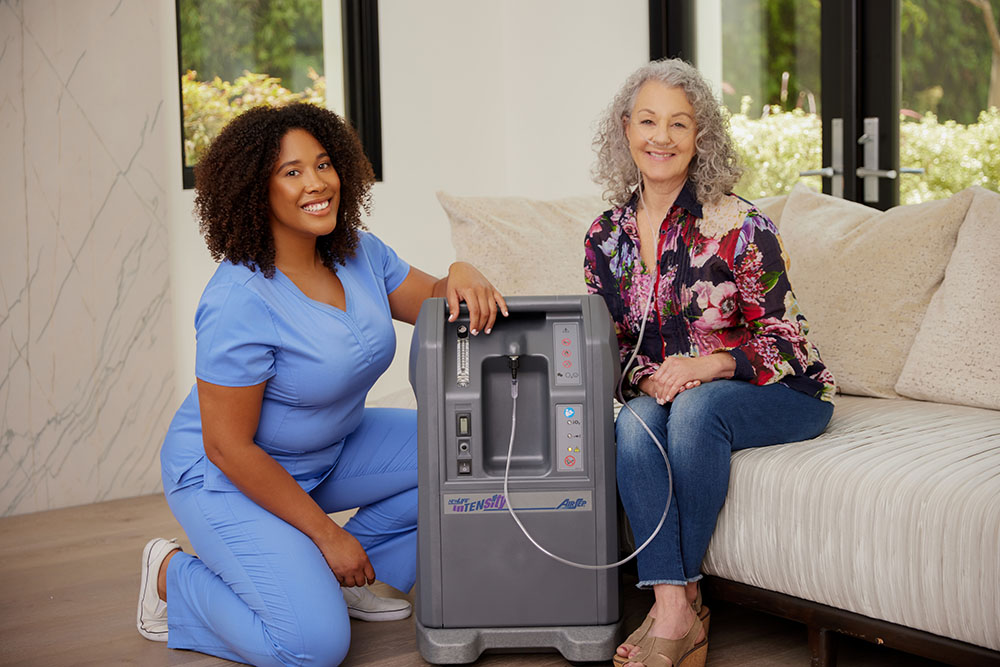
Adapting Your Home Environment for Safe Oxygen Use
Oxygen therapy is a common and effective treatment for chronic lung conditions that make it difficult to maintain healthy oxygen levels1. Whether you’re managing COPD, pulmonary fibrosis, or another respiratory condition, supplemental oxygen may improve energy, comfort, and overall health-related quality of life2.
Even though oxygen is not flammable on its own, it can make other materials (fuels) ignite and spread more easily therefore using oxygen safely at home is essential3. With proper setup and simple daily habits, you can use your equipment confidently and comfortably.
To learn more about oxygen therapy options, visit Home Oxygen Therapy.
Understanding Basic Oxygen Safety at Home
Oxygen itself does not burn, but it accelerates combustion, allowing fires to spread more rapidly4. That’s why oxygen safety guidelines matter for every patient.
Key principles include:
- Keep oxygen equipment away from open flames, sparks, or heat sources2
- Do not smoke or allow smoking near oxygen at any time1
- Always adhere to safety recommendations, whether you use oxygen continuously or intermittently.
Practicing these precautions may help protect both you and those around you.
Setting Up a Safe Space for Oxygen Equipment
Creating a safe home setup starts with where and how you position your oxygen equipment.
Tips for safe placement:
- Choose a well‑ventilated area. Oxygen concentrators need airflow and should not be placed up against walls or fabric that may block ventilation.
- Avoid tight or enclosed spaces. Closets and small corners can trap heat and restrict ventilation.
- Keep tubing tidy. Use clips, guides, or organizers to reduce tripping hazards and this may also improve mobility.
- Avoid flammable or heat‑producing items such as candles, gas stoves, fireplaces, and space heaters3.
- Use grounded electrical outlets. Plug concentrators directly into the wall and avoid extension cords when possible3.
- Post oxygen safety signage to help caregivers and visitors maintain safety5. Typically, these signs are supplied by your oxygen supplier during the equipment setup.
Planning for Daily Activities & Movement
Oxygen therapy is designed to enhance your independence, not diminish it. With careful planning, you can navigate daily activities with ease and safety.
- Plan and integrate tubing placement into everyday routines such as bathing, cooking, and sleeping1.
- Use portable oxygen equipment as prescribed to support safe mobility.
- Secure or route tubing along walls or using clips to prevent trips or tangles.
Creating a Safer, More Comfortable Home Environment
Your oxygen therapy needs may change over time. New equipment or changes in your prescribed flow rate may require updates to your home setup3. Maintaining ongoing communication with your healthcare provider or oxygen supplier can help ensure you’re always using your equipment safely.
Safe oxygen use begins with awareness, preparation, and small adjustments in your routine. A few thoughtful changes can significantly reduce risks and increase peace of mind.
To learn more about staying safe and comfortable with oxygen, explore our full range of resources: Home Oxygen Therapy.
With the right support and education, oxygen therapy can be safely integrated into your daily life, helping you breathe easier with confidence.
Disclaimer: The content on this blog is for informational and educational purposes only and should not replace professional medical advice, diagnosis, or treatment. Always consult your healthcare provider for guidance on your specific health needs.
1. https://www.lung.org/lung-health-diseases/lung-procedures-and-tests/oxygen-therapy/
2. https://my.clevelandclinic.org/health/treatments/23194-oxygen-therapy/
3. https://www.nfpa.org/Education-and-Research/Home-Fire-Safety/
4. https://www.fda.gov/medical-devices/home-use-devices/oxygen-concentrators/
5. https://www.nhlbi.nih.gov/health/copd/treatment/