What Is Obstructive Sleep Apnea?
OSA is a sleep disorder where the airway repeatedly becomes obstructed during sleep, causing breathing to stop and start. These interruptions can occur dozens or even hundreds of times per night, leading to fragmented sleep and reduced oxygen supply to the brain.
2024–2025 Snapshot:
The Growing Impact of OSA
- Over 936 million adults worldwide are estimated to have OSA.1
- In the U.S., around 39 million adults are affected, with up to 85% undiagnosed.2
- OSA is more prevalent in men and older adults, with risk increasing significantly after age 65.3
- Untreated OSA contributes to billions in annual economic losses due to healthcare costs, accidents, and lost productivity.3
The Cognitive Cost:
How OSA May Affect Memory
Recent studies have drawn a strong connection between untreated OSA and memory impairment:
- A 2024 study published in Neurology found that people with sleep-disordered breathing had larger hippocampal volumes and more white matter damage, both linked to disrupted memory function.1
- A 2025 UC Irvine study revealed that low oxygen levels during REM sleep were associated with damage to small blood vessels in the brain and thinning of the entorhinal cortex, a region critical for memory. 4
- A 2024 cross-sectional study found that individuals with sleep apnea symptoms had a 50% higher risk of memory and thinking problems.2
- Another study found that untreated OSA can lead to mild cognitive impairment up to 10 years earlier than in those without the condition.3
Why the Brain May Suffer
OSA can disrupt the brain’s ability to recover and store information:
- Oxygen deprivation can damage the hippocampus and entorhinal cortex—key memory centers.5
- Frequent sleep interruptions prevent deep, restorative sleep.
- Inflammation and oxidative stress: Obstructive Sleep Apnea (OSA) has a well-documented link to both inflammation and oxidative stress, which in turn can significantly impair brain health and cognitive function.6
- OSA leads to intermittent hypoxia (low oxygen levels during sleep), which triggers systemic inflammation. According to a recent study published in Neurology, inflammation can damage the brain’s tiny blood vessels. This disruption impairs the flow of nutrients and oxygen, weakening neural communication and threatening the health of brain cells over time.
- Meanwhile, OSA also induces oxidative stress—an imbalance between harmful oxygen free radicals and the body’s ability to neutralize them—this adds another layer of risk.7 This cellular stress accelerates brain damage and contributes to cognitive decline, making it a key factor in aging and neurodegenerative conditions.
- Together, inflammation and oxidative stress create a harmful environment for brain cells. This dual assault can impair memory, attention, and executive function—symptoms commonly reported in individuals with untreated OSA.
Treatment Offers Hope
Treatment may reduce the risk of memory loss:
- CPAP therapy (Continuous Positive Airway Pressure) has been shown to delay cognitive decline by up to a decade.8
- Patients using CPAP for at least 4 hours per night experience slower memory deterioration and improved sleep quality.9
Take Action Today
If you or someone you know experiences loud snoring, frequent awakenings, or excessive daytime sleepiness, consider a sleep evaluation and speak to your physician. Early intervention not only improves sleep, but it may also help protect your brain for years to come. Check out the Epworth Sleepiness Scale, a helpful prescreening tool—you can hand-carry your results to your doctor to review together and discuss next steps.
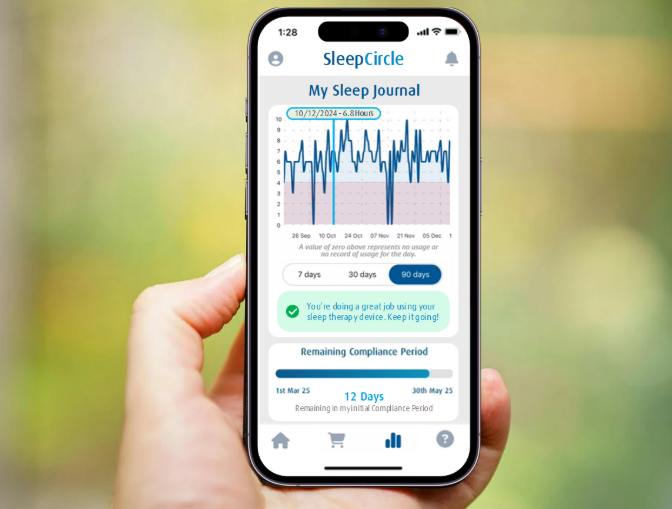
Once you're diagnosed with Obstructive Sleep Apnea (OSA) and your physician has ordered PAP therapy, Lincare is here to support you every step of the way. Our top-tier CPAP therapy services are designed to help you breathe easier, sleep better, and feel more energized throughout your day. With personalized care, expert guidance, and innovative tools like our SleepCircle® app, we make managing sleep apnea simple and effective.
1 https://www.sciencedaily.com/releases/2024/12/241218174722.htm
2 https://www.medicalnewstoday.com/articles/sleep-apnea-symptoms-may-cause-memory-problems/
3 https://health.clevelandclinic.org/if-you-have-sleep-apnea-your-memory-may-decline-earlier-in-life/
4 https://news.uci.edu/2025/05/07/study-links-rem-sleep-apnea-to-brain-changes-memory-loss-in-older-adults/
5 https://neurosciencenews.com/sleep-apnea-memory-brain-28842/
6 https://www.aan.com/PressRoom/home/PressRelease/5258/
7 https://medschool.uci.edu/news/study-links-rem-sleep-apnea-brain-changes-memory-loss-older-adults/
8 https://pmc.ncbi.nlm.nih.gov/articles/PMC7849660/
9 https://jcsm.aasm.org/doi/10.5664/jcsm.2138/
Disclaimer: The tools and resources mentioned are provided for informational purposes only and do not constitute endorsement by Lincare. They are shared solely as examples of available options to support awareness and exploration. Users are encouraged to conduct their own research and evaluate suitability based on individual needs and circumstances.