Understanding the INR Blood Test: Why It’s Ordered and What Results Mean
If you or a loved one is on anticoagulant therapy like warfarin, you’ve likely heard of the INR blood test. But what exactly is it and why is it so important?
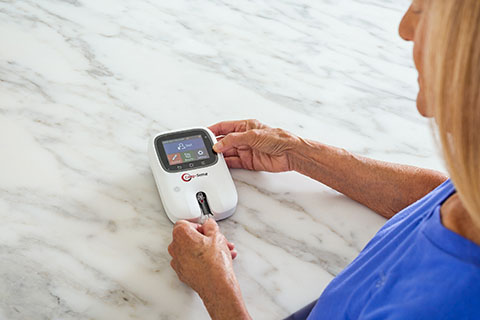
The INR (International Normalized Ratio) test helps monitor how quickly your blood clots. For patients taking blood thinners, this test helps to ensure medication is working effectively within the prescribed therapeutic range, helping to manage the risk of bleeding or clotting. Now with modern technology, at-home INR testing is now an option that offers convenience and peace of mind.
What Is the INR Blood Test?
The INR (International Normalized Ratio) blood test is a standardized way to measure how long it takes your blood to clot. It’s derived from the Prothrombin Time (PT) test, which evaluates the time it takes for blood to form a clot after specific reagents are added.
This test is crucial for1:
- Patients taking warfarin or other anticoagulants
- Individuals with clotting disorders
- Those with mechanical heart valves, atrial fibrillation, or a history of deep vein thrombosis (DVT) or pulmonary embolism (PE)
Why Doctors Order the INR Test
Doctors use the INR test to2:
- Monitor anticoagulant therapy effectiveness
- Ensure blood isn’t clotting too fast (risk of clots) or too slow (risk of bleeding)
- Adjust medication doses safely
Common conditions requiring INR monitoring include:
How to Interpret INR Results
Understanding your INR results is key to managing your health3:
| INR Range | Meaning | Risk |
|---|---|---|
| 0.8-1.2 | Normal (not on anticoagulants) | Low risk |
| 2.0-3.0 | Target for most warfarin users | Balanced |
| 2.5-3.5 | Target for mechanical heart valves | Higher bleeding risk |
| < 2.0 | Under-anticoagulated | Risk of clotting |
| > 3.0 | Over-anticoagulated | Risk of bleeding |
A low INR may mean your blood clots too quickly, increasing the risk of clots. A high INR means slower clotting, raising the risk of bleeding. Never adjust your medication based on INR results without consulting your healthcare provider.
The Convenience of At-Home INR Testing
Traditionally, INR testing requires frequent clinic visits. Now, at-home INR testing offers more convenient alternative.
Benefits of At-Home INR Monitoring4:
- Comfort and privacy
- Fewer clinic visits
- Consistent testing routinges
- Faster results and better control
- Improved health-related quality of life and treatment satisfaction
Home INR Testing & Monitoring Services through provide trusted solutions with easy-to-use devices and support.
Tips for Patients Managing INR at Home
To get the most out of at-home testing5:
- Test consistently (weekly or as prescribed)
- Track and share results with your provider
- Be mindful of lifestyle factors6:
- Diet (especially vitamin K intake)
- Medication changes
- Illness or stress
- Alcohol consumption
When to Contact a Doctor About INR Result
Seek medical attention if you experience7:
- Unusual bleeding or bruising
- Shortness of breath
- Chest pain
- Leg swelling or redness
These symptoms may indicate that your INR is outside the safe range and require urgent evaluation.
The INR blood test is a vital tool for managing anticoagulant therapy and preventing serious health risks. With the option of at-home INR testing, patients can enjoy greater convenience, safety, and control over their health.
Interested in Learning More?
Explore Home INR Testing Services
Disclaimer: INR testing services are provided by our affiliate mdINR.
1 https://www.healthdirect.gov.au/international-normalised-ratio-INR-test
2 https://medlineplus.gov/lab-tests/prothrombin-time-test-and-inr-ptinr
3 https://ansible.library.nyu.edu/inr-blood-test-meaning
4 https://thrombosis.org/patients/patient-articles/inr-testing-at-home-what-you-need-to-know
5 https://www.fda.gov/medical-devices/warfarin-inr-test-meters/tips-patients-and-caregivers-using-inr-test-meters-home
6 https://uihc.org/educational-resources/blood-tests-are-needed-when-taking-warfarin
7 https://my.clevelandclinic.org/health/diagnostics/prothrombin-time-test