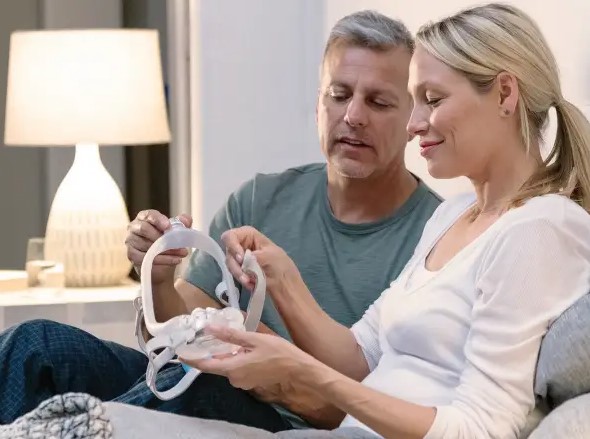
When one partner has sleep apnea, both people in the relationship can feel the effects. Loud snoring, interrupted sleep, daytime fatigue, and the challenges of adapting to treatment may impact everything from sleep quality to daily routines. The good news is that support from a spouse or partner may make a meaningful difference in helping someone manage sleep apnea and stay committed to treatment.
If your loved one has been diagnosed with obstructive sleep apnea (OSA), here are practical ways you can help them on their journey to better sleep and better health.
Understand What Sleep Apnea Is
Sleep apnea is a common sleep disorder that causes breathing to repeatedly stop and restart during sleep1. Obstructive sleep apnea, the most common type, occurs when the upper airway becomes blocked, reducing or completely stopping airflow2. Common symptoms include loud snoring, gasping for air
during sleep, daytime sleepiness, morning headaches, difficulty concentrating, and irritability3. Untreated sleep apnea may increase the risk of serious health conditions, including heart disease and stroke.
Taking time to learn about the condition can help you better understand the challenges your partner may face and why treatment is so important.
Learn more here: Obstructive Sleep Apnea (OSA) & Link Between Sleep Apnea & Heart Health
Encourage Them to Seek & Follow Treatment
Many people dismiss snoring as a nuisance, but persistent loud snoring and observed pauses in breathing can be signs of sleep apnea. In many cases, a partner is the first person to notice these symptoms and encourage medical evaluation. Someone who shares a bed or household may be helpful during the diagnostic process.
Once a diagnosis is made, encourage your partner to follow their treatment plan and attend recommended follow-up appointments. Positive reinforcement may be more effective than criticism when adjusting to lifestyle changes or sleep therapy.
Be Patient During CPAP Adjustment
Continuous Positive Airway Pressure (CPAP) therapy is considered a leading treatment for obstructive sleep apnea. CPAP works by delivering a steady flow of air through a mask to help keep the airway open during sleep, reducing snoring and breathing interruptions4.
Adjusting to CPAP can take time. Some users experience discomfort, mask fit issues, or frustration during the first few weeks. As a partner, you can help by:
- Offering encouragement rather than focusing on setbacks.
- Helping create a consistent bedtime routine.
- Celebrating small milestones, such as using the device throughout the night.
- Reminding them of the benefits, including better sleep and improved daytime energy.
Research suggests that provider support, education, and encouragement can improve CPAP adherence and treatment success5.
Create a Sleep-Friendly Environment
Good sleep habits benefit everyone in the household. Consider working together to create an environment that supports healthy sleep.
Helpful strategies include6:
- Maintaining a consistent sleep schedule.
- Keeping the bedroom cool, quiet, and dark.
- Limiting screen time before bed.
- Avoiding alcohol close to bedtime, as it can worsen sleep-disordered breathing.
- Encouraging healthy lifestyle habits that support overall sleep quality.
For some individuals with mild sleep apnea, healthcare providers may also recommend lifestyle modifications such as weight management and changes in sleep position7.
Watch for Signs of Ongoing Sleep Problems
Even with treatment, some people continue to struggle with symptoms. Be attentive to signs that your partner may need additional support, such as:
- Excessive daytime sleepiness
- Persistent fatigue
- Morning headaches
- Difficulty concentrating
- Continued loud snoring
- Trouble tolerating CPAP equipment
If symptoms continue, encourage them to contact their healthcare provider. Treatment adjustments, equipment changes, or additional evaluations may help improve results.
Learn more here: Don’t Sleep on It, Identifying Sleep Apnea Early
Focus on the Benefits Together
Sleep apnea treatment doesn't just help the individual diagnosed with the condition; it often benefits the entire household. Effective treatment may reduce snoring, improve sleep quality, increase daytime alertness, and support overall sleep health8.
Many couples find that addressing sleep apnea leads to better sleep for both partners, improved mood, and more energy for daily activities.
Be a Supportive Teammate
Living with sleep apnea can feel overwhelming at first, but your support may have a significant impact. Listening, encouraging treatment adherence, and celebrating progress can help your partner build confidence and stay committed to their therapy goals.
Remember, managing sleep apnea is a journey and it's one that's often easier when you face it together.
Learn more here: The Caregivers Guide to Supporting Loved Ones on Oxygen or CPAP Therapy at Home
Disclaimer: The content on this blog is for informational and educational purposes only and should not replace professional medical advice, diagnosis, or treatment. Always consult your healthcare provider for guidance on your specific health needs.
1. https://www.nhlbi.nih.gov/health/sleep-apnea
2. https://www.nhlbi.nih.gov/health/sleep-apnea
3. https://www.mayoclinic.org/diseases-conditions/sleep-apnea/symptoms-causes/syc-20377631
4. https://www.nhlbi.nih.gov/health/sleep-apnea
5. https://www.mdpi.com/2254-9625/14/9/163
6. https://www.mayoclinic.org/diseases-conditions/obstructive-sleep-apnea/in-depth/cpap/art-20044164
7. https://www.mayoclinic.org/diseases-conditions/sleep-apnea/diagnosis-treatment/drc-20377636
8. https://www.sleepapnea.org/cpap/benefits-of-cpap