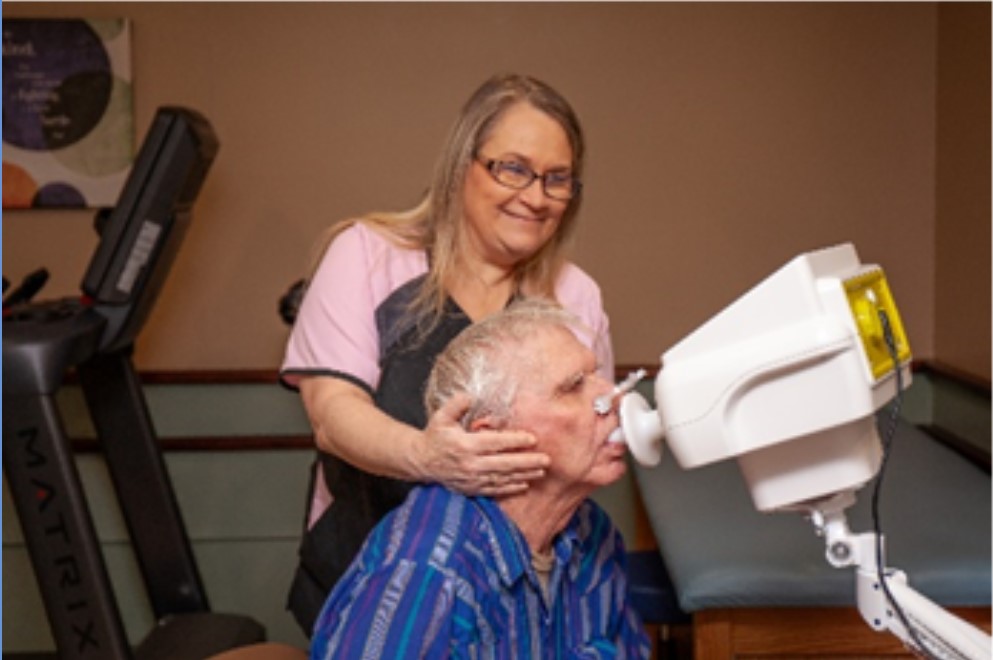
“Airway oscillometry is a pulmonary function test that superimposes sound waves onto physiological breathing to obtain measurements of airway resistance and lung compliance. Abnormal oscillometry parameters are present in 20% of the adult population and are significantly associated with respiratory symptoms and disease1,” said Tom F, Meridian’s National Director.
The introduction of airway oscillometry testing represents a major advancement in lung function assessment, particularly for individuals with severe respiratory conditions, according to Tom. Oscillometry is sensitive to small airway involvement in both chronic obstructive pulmonary disease and asthma and can identify lung mechanics changes at the initial stages of respiratory diseases as well as during disease progression. The new testing is particularly valuable in tracking the progression of patients with COVID-19 fibrotic lung disease2.
A Breakthrough in Lung Function Testing
Unlike conventional spirometry, which requires forceful exhalation and can be difficult for patients with advanced lung disease, oscillometry measures lung function while the patient simply breathes normally for approximately five minutes. Using gentle sound waves to evaluate airflow throughout both large and small airways, oscillometry provides detailed insights that standard tests may miss. Meridian has found that the addition of oscillometry to spirometry measurements identified a significant increase in patients with abnormal lung mechanics3.
Key Benefits of Oscillometry Include:
- Suitable for patients unable to complete traditional spirometry
- Detects small-airway abnormalities earlier
- Produces quick results
- Services covered by Medicare and commercial insurance
"This is a game-changer for our communities," said Kim R, Meridian Pulmonary Rehabilitation Specialist at CCMH. "We've had patients who couldn't complete traditional spirometry testing, which meant we couldn't accurately diagnose or monitor their pulmonary disease progression. Now we can offer them a comfortable, non-invasive option that gives us even more detailed information about their lung health."
How Oscillometry Differs from Traditional Pulmonary Function Testing
Traditional pulmonary function tests focus mainly on the large airways and rely on a patient’s ability to inhale and exhale with full force. Many patients with compromised lung capacity may find these maneuvers physically taxing or impossible. Oscillometry, however, delivers an evaluation of the entire respiratory system, including the small airways, which are often the earliest site of pulmonary disease. By identifying subtle changes sooner, providers can intervene earlier, improve health-related outcomes, and tailor treatments4.
About the Meridian Pulmonary Rehabilitation Program
Meridian operates a national network of Pulmonary Rehabilitation and Diagnostic Centers, offering a full spectrum of services for patients with chronic respiratory conditions. Each program focuses on:
- Pulmonary function testing
- Structured exercise training
- Education on disease management
- Personalized care planning
- Emotional and lifestyle support
Contact Information
For more information about Meridian’s Pulmonary Rehabilitation Program or oscillometry testing services, please contact:
Meridian
3421 Bannerman Road, Suite 202
Tallahassee, FL 32312
Phone: 866‑325‑RESP
Fax: 866‑412‑RESP